
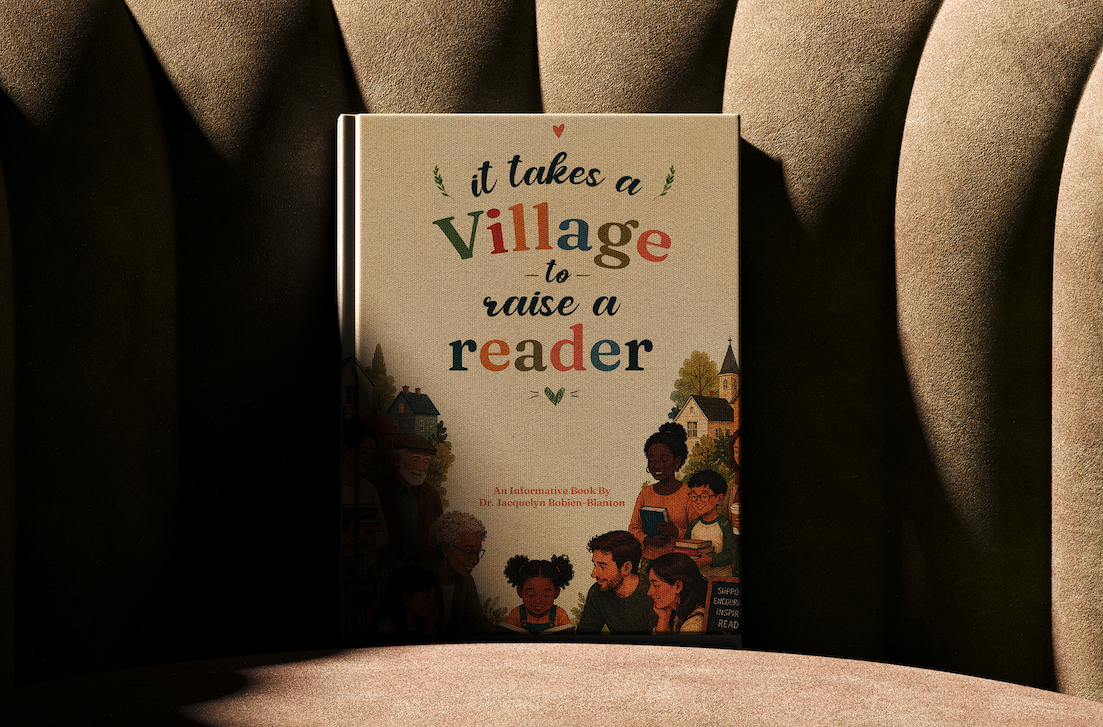
IT TAKES A VILLAGE TO RAISE A READER
An Educational Book
By Dr. Jacquelyn Bobien-Blanton
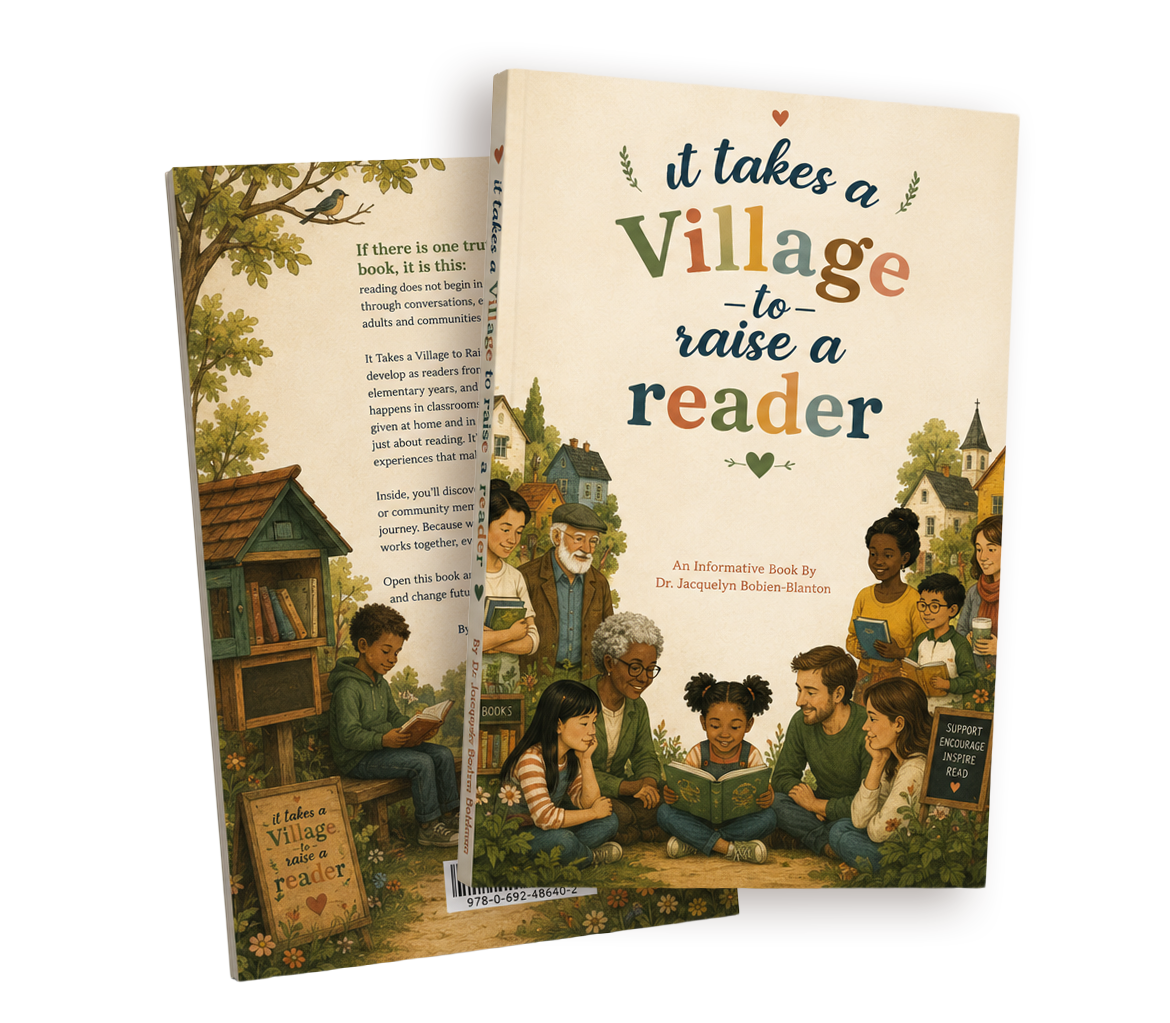
It Takes a Village to Raise a Reader examines the roots of the U.S. literacy challenge, emphasizing why third-grade reading proficiency is a critical turning point as children transition from "learning to read" to "reading to learn." Students who fall behind by fourth grade face heightened risks of academic failure, dropping out, and long-term socio-economic challenges.
Drawing on historical context, research, and personal reflections, the book outlines the literacy journey across three key areas:
Early Childhood (Ages 0–5): Highlights how early environments, relationships, and preschool experiences shape brain development and build a child's foundational "literacy résumé."
Elementary Instruction: Analyzes the science of reading, culturally responsive practices, student motivation, attendance, and summer learning loss.
Community Engagement: Emphasizes that schools cannot act alone. It offers actionable ways families, libraries, pediatricians, faith communities, and local businesses can collaborate to support young readers.
We have the tools; We know what to do; We know how to do it;
We need the will to do it!
PURCHASE YOUR
COPY
This book addresses reading issues in the US and offers strategies to support young children's reading. It explores the consequences for children, democracy, and society without strong reading skills, as well as challenges in schools and efforts to cultivate proficient readers. The goal is to help readers understand reading complexity and how to develop skilled readers.
Amazon Top New Release and Amazon Top 100 Education Books
Purchase IT TAKES A VILLAGE TO RAISE A READER from Amazon:
AFTER PURCHASE PLEASE LEAVE A REVIEW
Frequently Asked Questions
Still have questions? Take a look at the FAQ or reach out anytime. If you are ready to be a Champion for Children, Join the Movement.
-
The title is a direct nod to the African proverb, but it takes on a literal, urgent meaning in the book. The "village" isn't just an abstract concept; it is a call to action for everyone who surrounds a child. It includes parents, grandparents, early childhood educators, librarians, pediatricians, colleges/universities, youth organizations, and other community leaders. The book reframes literacy not as an isolated chore for a single teacher or parent, but as a collective, joyful responsibility. It provides a blueprint for how these different pieces of a child's world can come together to build a powerful foundation for reading.
-
Absolutely, in fact, you are the primary audience! One of the book’s most eye-opening insights is that the journey to becoming a reader begins long before a child ever steps into a kindergarten classroom. It dives deep into early brain development and the crucial windows for language development between birth and age eight. You’ll learn how everyday, simple interactions like talking, singing, and pointing out signs during a grocery store trip are actually laying down the neural pathways required for future reading success.
-
It Takes a Village to Raise a Reader is different because it goes beyond typical literacy guides by grounding its approach in the science of how children learn to read while making that research accessible and actionable for everyone, not just educators. It reframes reading as a collective responsibility, emphasizing that literacy development begins long before kindergarten and is shaped by early experiences, relationships, and environments. The book not only examines how we arrived at today’s reading challenges, but also equips families, educators, and communities with practical strategies and advocacy tools to create literacy-rich environments, empowering them to transform everyday spaces into places where reading can thrive.
-
I want readers to walk away with a sense of clarity, confidence, and collective purpose that they understand how children truly learn to read and recognize that literacy development begins long before formal schooling. More importantly, I want them to feel empowered to take action, knowing that they, whether educator, parent, or community member, play a vital role in shaping a child’s reading journey. Readers should leave equipped with practical strategies to create literacy-rich environments, a deeper awareness of the early foundations of reading, and the advocacy mindset needed to challenge the status quo and contribute to solving the reading crisis. Ultimately, readers should walk away believing: “I am part of the village, and I have the power to help every child become a reader.”